Tacticool: PvP Action Shooter
- 4.6
- Rating
- 10.00M
- Installs
- Free
- Price
 Analysis by App-foxy
I went into Tacticool: PvP Action Shooter expecting a quick mobile action game, but its appeal is more specific than that. This is a free-to-play action game from Panzerdog built around short, tense firefights where choosing the right weapon matters almost as much as aiming well. The basic idea is easy to understand, yet the matches can become surprisingly demanding once movement, cover, timing, and explosive weapons start affecting every decision.
That combination makes it a good fit for someone who wants a competitive shooter that works in short sessions rather than a large, story-heavy campaign. I would not recommend it blindly to every mobile player, though. The free entry point is attractive, but the presence of in-app purchases ranging from $0.99 to $99.99 per item means anyone sensitive to spending pressure should approach it with a clear limit. My experience is that the game is most enjoyable when I treat purchases as optional rather than as part of the normal route to progress.
What the core match experience feels like
The first thing I noticed is how much the game asks me to think about positioning. It is not just a matter of running toward an opponent and holding down an attack button. A shotgun encourages close-range confidence, while a frag grenade can change the shape of an encounter before an enemy is even in direct view. That simple choice between weapons creates different ways to approach the same situation.
You May Also Like

 Blood Strike: 2.5 Anniversary
Blood Strike’s Loadouts Turn Every Drop Into a Tactical Gamble
A close look at Blood Strike’s custom loadouts: how fast access to signature weapons reshapes its battle royale rhythm, rewards preparation, and narrows the gap between fights.

 Pandora - Music & Podcasts
Pandora’s Music Is Easy to Start, but Harder to Recover
Pandora’s strength is its low-effort path from a seed to a station. Its weak spot is how much confidence it asks you to place in connection, setup, and quiet recovery.

 8 Ball Pool
 Is Built on Rivalries, Rematches, and Routine
A close look at the rivalries, rematches, shared routines, and unanswered safety questions that turn a quick pool match into a persistent mobile community.

 Samsung Music
’s Quiet Strength Is Playing What You Already Own
Its reach comes less from spectacle than from dependable access to a personal library. That simplicity is both the app’s strongest retention engine and its ceiling.

 AccuWeather: Weather Radar
AccuWeather Review: A Quick, Clear Forecast for Everyday Decisions
For everyday plans, the best forecast is the one you can understand quickly. AccuWeather makes rain timing, radar, and local conditions easy to act on, with a few trade-offs.

 Hill Climb Racing
Why Hill Climb Racing Still Turns Crashes Into One More Run
A tiny car, a bumpy hill and one more upgrade: Hill Climb Racing keeps resurfacing because its simple chaos makes every near-miss feel personal.
More From Our News Desk



In a typical session, I find myself switching between aggression and patience. Charging forward can work when an opponent is isolated, but it can also expose me to a counterattack. Waiting near cover gives me more time to read the fight, although staying passive for too long can surrender useful ground. The best moments come when I make a decision before the action becomes chaotic, rather than reacting after everyone is already firing.
The controls and pace are clearly designed for mobile play, but the competitive setting means a few seconds still matter. This is useful when I have only a short break and want something more involved than a casual puzzle. It is less suitable when I want a relaxed game that I can play while distracted. The action rewards attention, and the realistic combat presentation gives mistakes a sharper feeling than a purely arcade-style shooter might.
I also appreciate that the weapon choice is not merely cosmetic. A shotgun changes how close I need to get and how carefully I must choose an approach. A frag grenade is valuable for disrupting an opponent’s position, but using it at the wrong moment can leave me without the tool I expected to rely on. That creates a small but meaningful layer of planning before the encounter begins.
Why the weapon decision matters more than it first appears
A useful habit is to choose a weapon based on the space and my mood, not just on a favorite item. When I am impatient, the shotgun tempts me into direct confrontations. That can be effective, but it also exposes poor timing quickly. When I use a frag grenade, I tend to play with more awareness of where an opponent might move next. The weapon therefore changes my behavior, not only my damage pattern.
One practical tip is to avoid throwing a grenade simply because it is available. I get more value when I first identify what I want it to accomplish: force an enemy away from a position, interrupt an attack, or create a safer route. If I cannot name the purpose, holding it for a moment is often the better decision. This is the kind of small discipline that separates a deliberate match from frantic button pressing.
Another useful adjustment is to treat cover as part of the weapon plan. A close-range weapon becomes harder to use if I expose myself too early, while an explosive option can make an opponent move before I commit. Thinking in those terms helps me avoid the common mistake of blaming the weapon for a failed attack that was really caused by poor positioning.
Progress, spending, and the pressure to keep going
The game is free to download, which makes trying it straightforward. I can learn whether the shooting rhythm suits me without paying at the start. It also has a Teen content rating, so parents and younger players should consider that label before installing it, especially because the focus is competitive combat rather than harmless toy-like action.
The financial side deserves a more careful look. Individual in-app purchases are listed from $0.99 up to $99.99, a wide range that covers small optional spending as well as very expensive single items. I would set a personal budget before playing, particularly if I am the kind of player who dislikes seeing purchase prompts during a long progression period. Free access is a genuine advantage, but it does not mean the surrounding spending model will feel equally comfortable for everyone.
I do not see a reason to assume that paying automatically makes someone better, and I would avoid making that claim without a clear basis. At the same time, a competitive game with purchasable items can create pressure even when purchases are not strictly required. The important question for me is whether I can enjoy the matches while ignoring the shop. If the answer is no, the free price becomes less meaningful in practice.
My advice is to play several sessions before buying anything. That gives enough time to discover whether the basic combat loop is genuinely enjoyable or whether the excitement comes only from unlocking something new. It also prevents a common mobile-gaming mistake: spending early, then realizing that the game’s pace or competitive atmosphere is not a good personal fit.
Players who enjoy steady improvement may accept some pressure as part of the genre. Players who want a completely predictable experience, with no temptation to spend, may prefer a premium shooter or an offline action game instead. That is not a criticism of the combat itself; it is a difference in what each player expects from a free competitive title.
How fair does competition feel?
Fairness is the question I would ask before recommending any competitive mobile shooter. In this case, the safest conclusion is a measured one: the game offers a skill-based combat loop involving aim, movement, timing, weapon selection, and positioning, but the existence of purchasable items means I would not promise that every player will experience progression in exactly the same way.
For me, competitive fairness is not only about whether a purchased item is stronger. It is also about whether a player can make meaningful decisions without feeling pushed toward the store. The shotgun and frag grenade choices already create tactical variety, so I pay attention to whether I am learning the match or merely chasing the next upgrade. That distinction matters more over time than the excitement of the first few rounds.
A good way to test this is to compare how I perform after improving my decisions rather than after acquiring something new. I ask myself whether better positioning lets me survive longer, whether I am wasting grenades, and whether I am choosing fights intelligently. If those improvements noticeably affect results, the game gives me useful room to develop as a player. If progress feels dominated by purchases, I would reconsider how much time or money I want to invest.
I also recommend judging fairness over a longer stretch instead of one frustrating match. A single defeat can come from bad timing, a poor weapon choice, or simply an opponent who read the situation better. Repeated frustration is more informative. If I keep feeling that the outcome is decided before I can use strategy, then this is probably not the right competitive game for me, regardless of its strong rating.
The public response is encouraging: the game holds a 4.6 average from around 749 thousand ratings, with about 28 thousand written reviews. It has also passed 10 million installs, which suggests that finding active interest in the title is not a concern. Those figures tell me the game has broad appeal, but they do not replace my own test of whether its spending model and competitive rhythm feel fair.
Who will enjoy it, and who should skip it?
I think the strongest audience is someone who likes mobile action games with direct competition, short sessions, and tactical weapon choices. If you enjoy learning from failed attacks, adjusting your approach, and making quick decisions under pressure, the game has enough depth to keep the basic idea interesting. It is also a sensible choice for a player who wants action without committing to a long single-player campaign.
It works particularly well in an everyday situation such as a commute break or a few minutes between tasks. I can play a focused session, put the phone away, and return later without needing to remember a complicated story. The danger is that “one more match” can feel tempting after a close defeat, so I would avoid starting a session when I have a strict deadline or need something calming.
I would be more cautious about recommending it to someone who dislikes realistic combat themes, competitive losses, or free-to-play shops. The Teen rating is relevant here, and the game’s identity is tied to fighting rather than exploration or gentle problem solving. It is also not my first choice for players who want a controller-first experience, a deep narrative, or a completely purchase-free environment.
Compared with a traditional offline action game, this title is more convenient for quick competitive play but less relaxing and less self-contained. Compared with a slower tactical game, it gives me faster feedback and more immediate action, but it leaves less room for long planning. Compared with a purely casual shooter, it asks me to take weapon timing and positioning more seriously. Those trade-offs explain its appeal better than the short store summary does.
Device expectations and version context
The game supports Android devices running version 7.0 or later, so it is not restricted to only the newest phones. Even so, compatibility is not the same as comfort. A device that technically runs the game may still make fast action less pleasant if its screen, controls, or performance are not well suited to sustained play. I would test a short session before deciding whether it deserves a permanent place on my phone.
The current version is 2.16.10, and the game was released on January 29, 2019. That history matters because this is not a brand-new experiment waiting to prove its concept. It has had time to establish its identity, and the large install base shows that many players have already chosen to try it. I still prefer to judge it by the present experience rather than by age alone: an older release can be polished, but it can also feel less fresh to players who expect constant novelty.
One detail I would keep in mind is storage and attention rather than just installation. Competitive action games become less enjoyable when I have to play with distractions, notifications, or a nearly full device. I close unnecessary interruptions, use a stable connection, and give myself enough time to finish a session. Those simple habits do more for my experience than changing weapons repeatedly without a plan.
The questions I would settle before downloading
If you are wondering whether it is truly free to start, yes: the listed price is free. The more useful follow-up is whether you should spend immediately. My answer is no. I would first confirm that the match pace, combat style, and competitive pressure suit me, then decide whether any purchase adds value for my own play rather than responding to impatience.
If you are asking whether it is suitable for younger players, the Teen rating should guide that decision. The game centers on realistic fighting, so it is not comparable to a harmless cartoon game simply because it is played on a phone. Parents should also discuss the purchase range before allowing spending, since the highest listed individual purchase is substantial.
If you want to know whether it can replace a full console or PC shooter, I would say only for a particular purpose. It can provide quick mobile action and tactical encounters, but it is not the same kind of experience as a large, story-led game with expansive controls and a long campaign. I see it as a focused mobile alternative, not a universal replacement.
If you are unsure whether purchases are necessary to compete, I would begin by tracking my decisions rather than my inventory. Can I improve by using cover, selecting the right moment, and saving a grenade for a clear purpose? If yes, I can enjoy the learning process. If every setback makes me feel that I need to buy something, I would stop before the game turns from entertainment into obligation.
My final trust verdict
After spending time with it, I see Tacticool as a focused action game with a clear strength: it turns a small set of combat choices into tense, readable decisions. The weapon contrast gives matches personality, and the mobile format makes it easy to fit into short breaks. Panzerdog has built something that is more tactical than its quick-fire presentation might suggest.
My trust in the game is strongest when I treat it as a free trial of a competitive shooter, not as a promise that every player will progress in the same way without spending. The listed purchase range is too broad for me to ignore, but it is also not a reason to dismiss the combat before trying it. I would install it, play without buying anything at first, and make a decision based on whether the matches themselves remain fun.
My recommendation is simple: try it if you want mobile firefights with meaningful weapon choices, but protect your budget and your time from the start. With that mindset, the game can be a satisfying action pick for focused sessions. Without that boundary, its competitive pressure and optional spending may outweigh the fun, especially for players who prefer calm, offline, or fully premium games.
FAQs for Tacticool: PvP Action Shooter
01What is Tacticool: PvP Action Shooter?
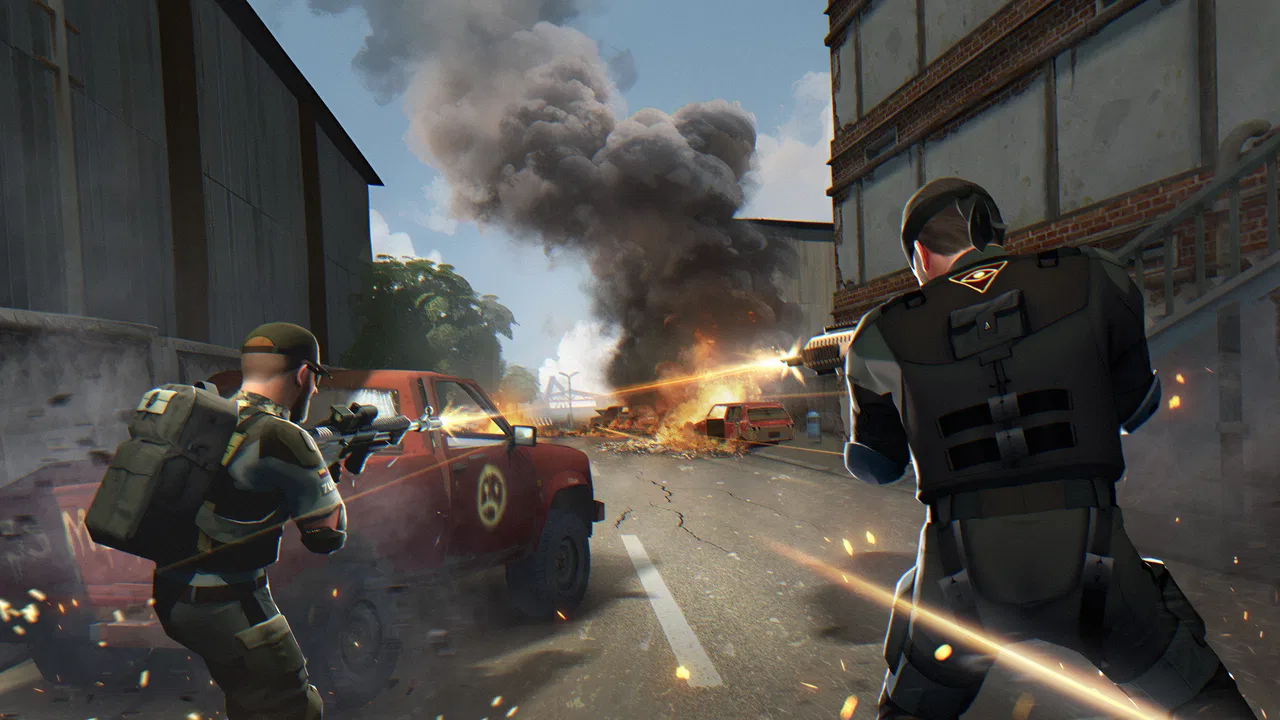
Tacticool: PvP Action Shooter is a fast-paced, top-down multiplayer shooter focused on short, tactical matches. Players form teams, choose from different operators, and fight across compact maps using firearms, vehicles, explosives, and environmental cover. Unlike a traditional run-and-gun game, success depends on positioning, teamwork, weapon selection, and adapting quickly to the changing battlefield.
02Can Tacticool be played offline?
No, Tacticool is primarily an online multiplayer game and requires a stable internet connection to access its main features. Matches are played against other players in real time, so offline play is not the central experience. A reliable Wi-Fi or mobile data connection is recommended, especially during competitive matches where connection problems can affect movement, aiming, and overall performance.
03Is Tacticool free to download and play?
Tacticool is free to download, allowing players to begin playing without paying an upfront purchase price. However, it includes optional in-app purchases for items such as progression resources, cosmetic content, and other upgrades. You can enjoy the core gameplay without spending money, although investing time or purchases may help unlock operators, weapons, and improvements more quickly.
04Does Tacticool support team-based multiplayer and different game modes?
Yes, team-based multiplayer is one of Tacticool’s main attractions. Players cooperate with teammates in objective-focused battles where communication, coordinated attacks, and controlled movement can make a significant difference. The game includes different combat scenarios and objectives, so matches are not limited to simply eliminating opponents. The exact modes and available content may change through updates and events.
05What devices are recommended for playing Tacticool smoothly?
Tacticool can run on many modern Android and iOS devices, but a relatively recent phone or tablet is recommended for smoother performance. Because matches contain several players, explosions, vehicles, and detailed environments, older or entry-level hardware may experience reduced frame rates or longer loading times. Keeping the operating system updated and closing background apps can also improve stability.
Pros
- Fast-paced 5v5 matches are easy to start and finish.
- Vehicles add variety and tactical options during battles.
- Destructible environments create opportunities for ambushes.
- Multiple operators offer different abilities and playstyles.
- Team objectives encourage communication and coordinated attacks.
Cons
- Progression can feel slow without regular play or spending.
- Random teammates may ignore objectives and weaken your team.
- Matchmaking can place new players against more experienced users.
- Frequent combat may drain battery quickly on older devices.
- Limited-time events can make the game feel repetitive between updates.

Tacticool: PvP Action Shooter
Gallery